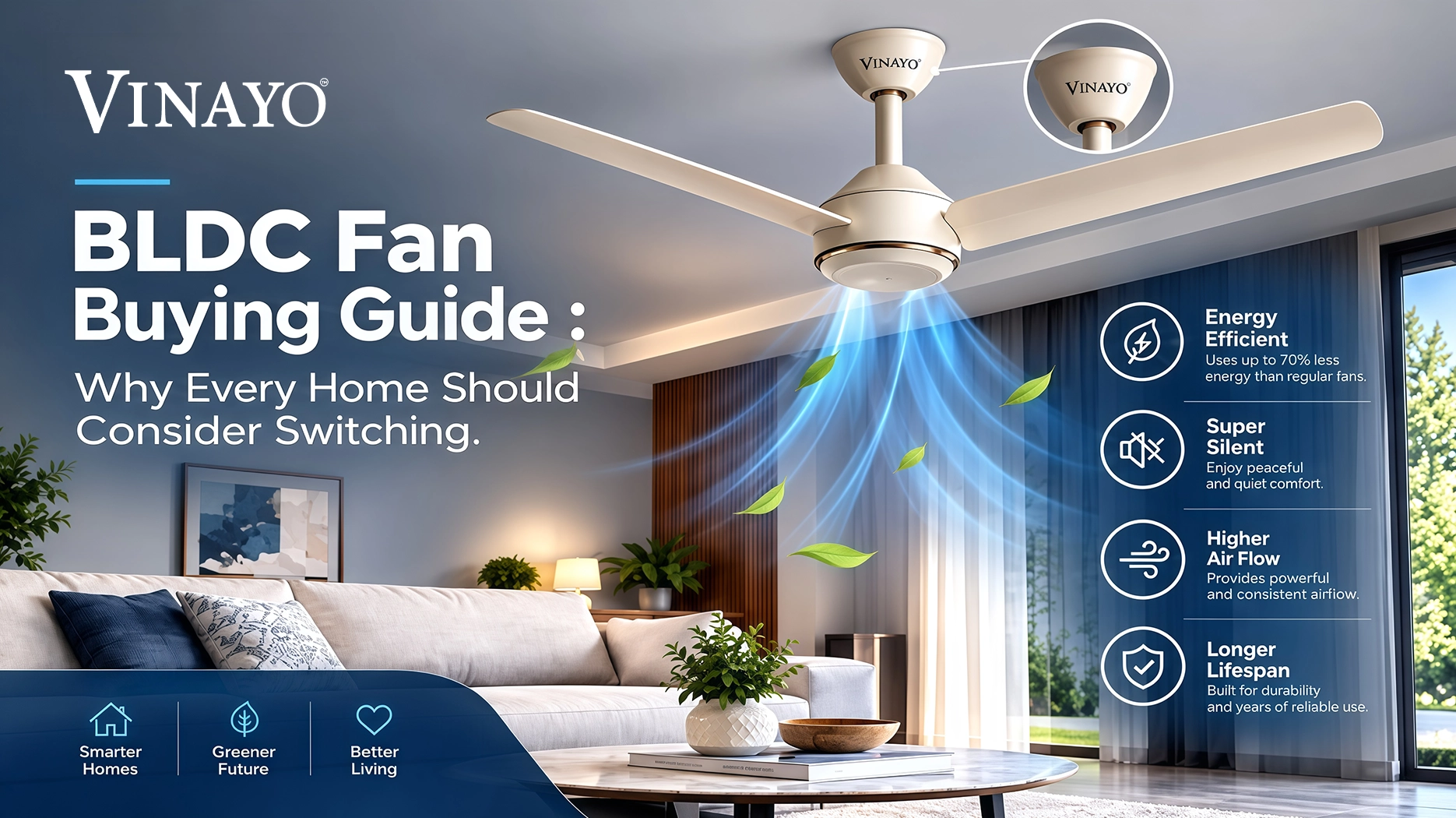
Ceiling fans run for hours every day in most Indian homes and they are among the biggest causes of high electricity bills. BLDC fan is an alternative and here is what BLDC fan buyer should know before switching.
What Makes a BLDC Fan
BLDC means Brushless Direct Current motor. Unlike induction motor fans BLDC fan uses more efficient motor technology that uses much less electricity. Usually up to 65% less power. While giving the same or better airflow.
Key Benefits
– Major electricity savings: 28–35 watts versus more than 75 watts for traditional fans
– Quieter operation: Smoother motors create less noise
– Better airflow control: Most BLDC fans come with remote‑controlled multi‑speed settings, including very low speeds
– Longer motor life: Fewer moving parts cause wear
– Low starting current: BLDC fan puts less strain on home wiring at startup
Is the Higher Upfront Cost Worth It?
BLDC fan cost more at first. Electricity savings appear quickly. Especially for BLDC fan running 8–10 hours a day in bedrooms and living rooms. Over 2–3 years savings often cover the price difference. Keep saving money after that.
Features to Look For
– Control with multiple speed settings
– Timer function for automatic shut‑off
– Sleep mode that gradually reduces speed through the night
– Boost mode for maximum airflow when needed
– Display indicator showing current speed setting
Where BLDC Fans Make the Most Sense
– Bedrooms and living rooms where BLDC fan runs long hours daily
– Homes with multiple BLDC fans, where savings multiply
– Areas prone to voltage fluctuation because BLDC motors handle this better
A Quick Way to Estimate Your Savings
A traditional fan running 10 hours a day at roughly 75 watts uses about 0.75 units of electricity daily. A BLDC fan running the hours at about 30 watts uses only 0.3 units. A saving of about 0.45 units per BLDC fan per day. Multiply that across BLDC fans in a home and across a full month and the difference becomes hard to ignore.
Final Thoughtsg 3
A BLDC fan is not eco‑friendly BLDC fan pays for itself over time with lower electricity bills. Vinayo BLDC fans combine energy efficiency with consistent airflow making Vinayo BLDC fans a smart long‑term upgrade for any home.
Frequently Asked Questions:
- What is the difference between a BLDC fan and a normal ceiling fan?
A BLDC fan uses a Brushless Direct Current motor, which is designed to consume less electricity than a conventional induction-motor ceiling fan. BLDC fans also commonly offer features such as remote control, multiple speed settings, timer functions, and quieter operation. - How long does a BLDC fan need to run to make the electricity savings noticeable?
The savings depend on the fan’s wattage, daily usage, electricity tariff, and the cost difference compared with a conventional fan. Fans used for several hours every day, especially in bedrooms and living rooms, generally offer greater potential for long-term savings. - When is it better to replace a normal ceiling fan with a BLDC fan?
Replacing a conventional fan can make sense when the fan is used for long hours every day, your electricity consumption is high, or you want features such as remote control, timer, sleep mode, and lower power consumption. - How do I choose the right BLDC fan for my room?
Consider your room size, required airflow, fan sweep, ceiling height, motor performance, speed settings, noise level, and energy consumption. Larger rooms may require a fan with a larger sweep or higher airflow to circulate air effectively. - Can a BLDC fan be used throughout the night?
Yes. BLDC fans are well suited for bedrooms and overnight use because they generally consume less electricity and operate quietly. Features such as sleep mode and timer functions can also help provide comfortable airflow while reducing unnecessary operation.