An iron is one of those appliances every household needs. The choice between a dry iron and a steam iron is not always obvious. Both get your clothes crease‑free. The right choice depends on your fabric types and ironing habits.
How Each Type Works
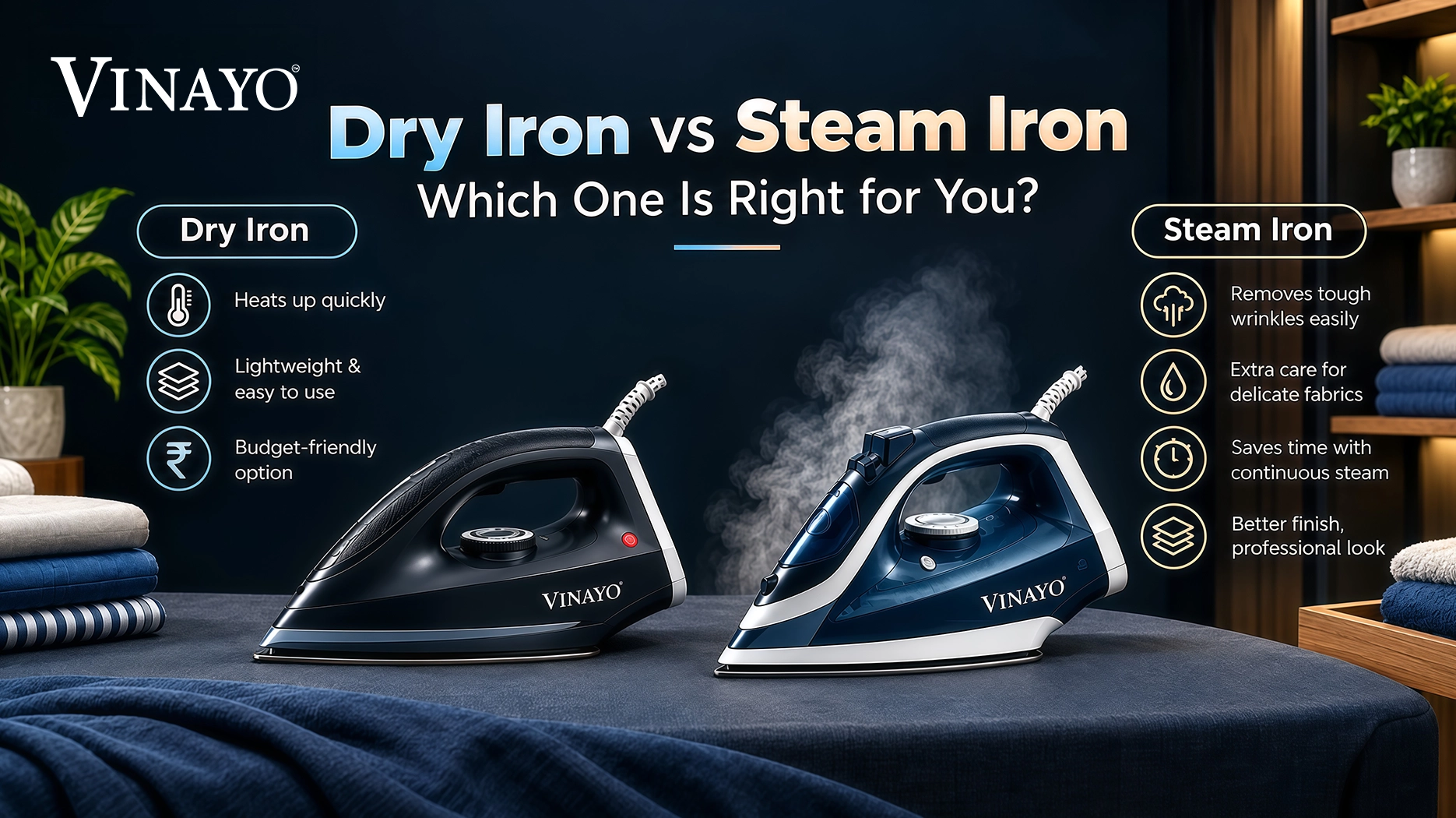
- A dry iron uses heat alone to smooth out creases. It is simple, reliable. Requires no water refilling. Just heat up and go.
- A steam iron combines heat with a burst of steam through the soleplate, which relaxes fabric fibres effectively and makes it easier to remove stubborn creases especially on cotton and linen.
Which Fabrics Benefit Most from Steam?
If your wardrobe has a lot of cotton shirts, linen or heavier fabrics that wrinkle easily a steam iron will noticeably cut down ironing time and effort. For fabrics or synthetic blends a dry iron often does the job just as well.
Comparing Convenience
- Dry iron: No water refilling, lighter weight, affordable, ready to use instantly
- Steam iron: Needs periodic refilling, slightly heavier but delivers better results on tough creases with less effort
Features Worth Considering
- For dry irons: non‑stick or ceramic‑coated soleplate, adjustable temperature dial, ready indicator light.
- For steam irons: steam control, anti‑drip and anti‑scale features, vertical steam function for hanging garments, auto shut‑off for safety.
A Quick Decision Checklist
Ask yourself: Do you mostly wear cotton or linen? A steam iron will save you effort. Do you iron occasionally or mostly synthetic and mixed fabrics? A dry iron is likely enough. Is budget your top priority? Dry irons are generally more affordable.
Final Thoughts
There is no better” iron. It comes down to what you wear and how often you iron. Vinayo offers both steam iron options built with durable soleplates and reliable heating elements so you can pick the one that fits your household’s laundry routine.
Frequently Asked Questions
- What features should I check before buying an electric iron?
Look for features such as an adjustable temperature control, a smooth soleplate, a comfortable grip, an easy-to-read indicator light, and suitable power output. For steam irons, also consider steam control, anti-drip, anti-scale, and auto shut-off features. - How do I choose the right temperature setting for different fabrics?
Always check the care label on the garment before ironing. Use lower temperatures for delicate or synthetic fabrics and higher temperatures for fabrics such as cotton and linen. Avoid using excessive heat, as it can damage or burn some materials. - When should I choose a steam iron instead of a dry iron?
Choose a steam iron if you regularly iron cotton, linen, or heavier fabrics with stubborn wrinkles. A dry iron may be more suitable if you mostly iron synthetic or blended fabrics, iron occasionally, or prefer a simpler and more affordable appliance. - How can I prevent my iron from damaging clothes?
Use the temperature recommended for the fabric, keep the soleplate clean, and avoid leaving the hot iron stationary on clothing. For steam irons, using the appropriate water and maintaining the appliance can also help prevent residue from transferring onto garments. - What should I do if my steam iron starts leaking water?
First, check that the water tank is not overfilled and that the iron is being used at the correct temperature for steam. If water continues to leak despite following the manufacturer’s instructions, stop using the iron and have it checked by an authorised service professional.