BLDC fans have gained popularity among modern Indian homeowners due to their ability to create comfortable airflow, contemporary aesthetic appeal and energy efficient performance. Whether relaxing in your living room, focusing in your home office or simply sleeping at night a BLDC ceiling fan can help you maintain the air circulation necessary to promote your wellbeing with minimal electricity consumption when compared to many conventional ceiling fans BLDC stands for Brushless Direct Current and BLDC fans feature electronically regulated motors that change their operation according to the selected speed setting. Unlike many traditional fan types which utilize standard induction motors plus alternative methods for speed regulation, the BLDC technology makes it possible to modify operations on a much lower level.
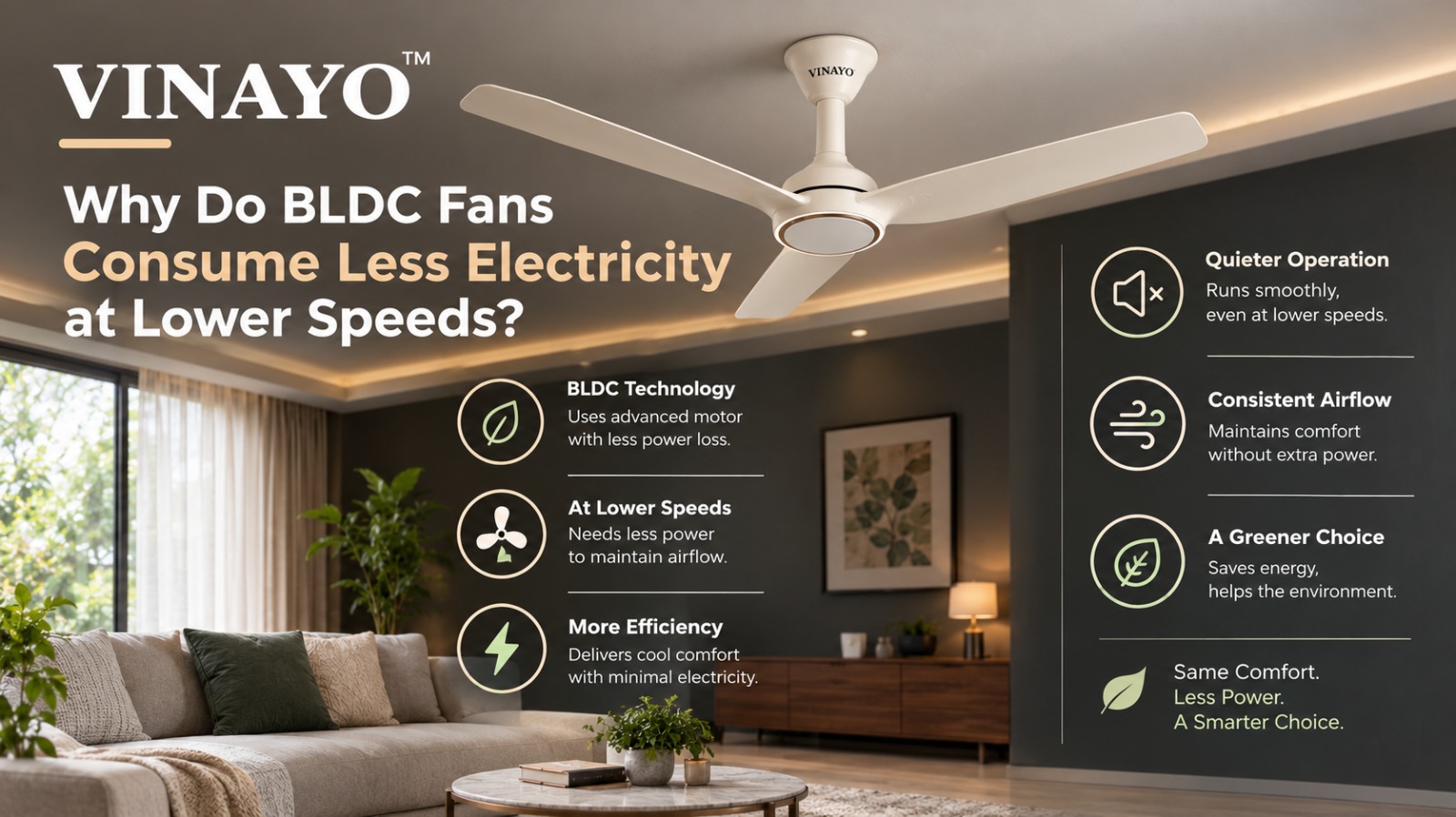
One of the most striking advantages of a BLDC fan is that its electricity consumption is generally lower as you reduce its speed. This is primarily due to the fact that the motor requires comparably less power to slowly turn the blades and create less airflow. However, why exactly is it this way and how can you take advantage of this feature to reduce your home electricity consumption? Understanding the mechanism and logic lies behind these fascinating facts and it can help you purchase a much more energy efficient appliance.
How Does a BLDC Fan Work?
In order to fully understand why BLDC fans consume less electricity at lower speeds it is important to know more about what sets them apart from their competitors. BLDC fans feature brushless motors which are regulated by an electronic circuit. The circuit controls how much electricity is allowed to reach the motor and consequently, how fast it will turn.
As you increase the speed of the fan the motor will have to make the blades spin faster in order to produce more power and airflow. And when you decrease the speed, the circuit will make sure that its operations are modified to reduce the motor’s turning speed as well. This makes the electronic regulation into the core of BLDC technology which is also the reason for their high level of energy-efficiency.
While conventional ceiling fans also have the ability to operate at different speed levels – their motor types and overall electronic setup differs from that of a BLDC fan. In turn, their electricity consumption will also be different at any given airflow. Two fans can be put at the same speed and power but they will likely exhibit significantly different characteristics due to differences in their speed regulators, blade designs, motor performance and many other qualities.
Why Do BLDC Fans Consume Less Electricity At Lower Speeds?
In general, the link between a fan’s speed and its electricity consumption is defined by the amount of mechanical work done by the motor. Several factors contribute to explain why reducing the speed of a BLDC fan also reduces its energy consumption.
1. Lower Speed Requires Less Mechanical Effort
When a ceiling fan is spinning, its primary function is to make sure that the air in a room is constantly circulating. The blades turn at a certain speed and create more or less power depending on the selected level. As the blade rotation speed is increased they will generally require more effort in order to turn, due to higher aerodynamic drag. A lower speed generally means less mechanical effort is needed to make the blades turn and the motor will consequently require less electricity in order to maintain the selected level.
By reducing the speed at which your fan operates you can significantly reduce the amount of electricity it needs in order to maintain the desired power level and airflow. This can have major benefits for your electricity bill during warm season when you may only need the air circulation at a low level in order to enjoy a comfortable ambient temperature. Operating a fan at its max power when this is not required can be unnecessary from an energy-efficiency point of view.
2. Electronic Speed Control Modifies Motor Operations
One of the major reasons why a BLDC fan is able to conserve electricity is its sophisticated electronics. The main circuit of a BLDC fan controls the operation of the motor, which means that it regulates the electricity flow according to the selected power level. This is also the reason why you are not limited to simply adjusting the power level using a mechanical regulator you can count on much better efficiency as you reduce the speed at which the fan operates. The circuit makes sure that the operations of the motor are modified accordingly in order to reduce power consumption, depending on the selected model.
Of course, you must also keep in mind that a BLDC fan will consume a different amount of electricity at the same speed level, depending on the model. Some manufacturers will put greater emphasis on the production of efficient motors and circuits and you will experience different improvements at different brands. It is important to analyze the technical specifications stated by the manufacturer before making your buying decision.
3. Lower Airflow Consumes Less Electricity
The connection between a fan’s speed and its airflow capacity is apparent and decreasing the former will reduce the latter as well. A lower fan speed setting generally produces less power and consequently, less airflow. A higher speed setting generally produces more power and consequently, more airflow.
Generating more power and airflow will make the motor work harder and its electricity consumption will increase accordingly. Less airflow will require it to make less mechanical effort as well, which also means reduced energy consumption. Lower speed settings allow you to reduce the amount of electricity consumed by the fan, since it is able to maintain a reasonable level of power. This can be extremely useful when you only need to experience a soft, refreshing breeze rather than blast of cool air.
You can, for example, reduce the level during the night when the external air temperature is already acceptable. A medium setting will keep a steady level of cooling throughout the evening – and a higher setting is best reserved for hot summer days when you need more power to stay cool. It is always important to put your energy-efficiency first and try out different levels in order to identify the right balance between electricity consumption and your personal comfort requirements.
4. Efficient Motor Design Can Help Reduce Power Consumption
The motor is one of the most influential elements which determine how much electricity your fan will consume at any given time. BLDC motors allow for greater energy-efficiency than many of their competitors. Due to the design and construction, there are losses which are minimized depending on the selected power level. However, you should always remember that the efficiency of different models can vary significantly. An effective combination of powerful but energy-efficient motors, optimized circuits and appropriate blade design can allow a fan to deliver more power without increasing the wattage too drastically. However, it is important to realize that not every fan featuring the BLDC designation will offer the same performance characteristics.
Electricity consumption, motor rated power, airflow performance and sound pressure levels are all essential variables which you should analyze before purchasing a fan.
Electricity Consumption
In general, BLDC fans will consume less electricity than their counterparts because of their energy-efficient construction and smart speed regulation. However, it is necessary to compare the technical specifications and general performance of individual products to identify the most appropriate solution for your application. Make sure you analyze the fan’s electricity consumption, power rating, airflow performance and sound pressure level according to the selected speed.
Operating at Lower Speeds
The electronically-regulated motor of a BLDC fan allows a significant variation in power and consequently, the change in airflow. This enables you to operate the fan at lower levels and make sure you save on electricity when only a small amount of power is required. Conventional ceiling fans also allow speed variation – but it will depend on their motor design as well as the type of speed regulator that is used in order to put the fan at the required level.
Reduced Long-Term Running Costs
As your ceiling fan likely operates for several hours per day, it is essential to make sure you reduce its electricity consumption whenever possible. A small amount of power saved on a daily basis will accumulate to significant bill reductions on a yearly basis, particularly if the fan is operated frequently.
Additional Features and Convenience
Various BLDC fans can offer greater convenience thanks to their remote control option, sleep setting and other additional functions such as multiple speed levels or power-saving features. However, make sure that the fan includes these functions and operate your appliance according to its specific requirements.
When choosing between a conventional and a BLDC ceiling fan, make sure you analyze their rated power, airflow performance, noise, warranty, additional functions, rated power and convenience of operation instead of focusing on only on a single detail. This way, you will easily be able to identify the product which has been created specifically for your requirements.
Tips to Help Reduce Electricity Consumption of a BLDC Fan
Understanding how electricity consumption works is only one side of the story your personal habits also play a major role in determining the final result.
Optimize the Speed Setting You Use
Avoid using the highest speed every time you run your fan the lower the required power level is, the more electricity you will save. If a low level helps you enjoy a comfortable night’s sleep during the hot summer days use it more often. A medium level is perfect for everyday use while the highest level should be left for hot summer days when you struggle to keep your room at a comfortable temperature.
Turn the Fan off When you are Not Using It
Make sure you only use your fan when you really need it. While a BLDC option may consume less electricity than a conventional ceiling fan, it is always wasteful to put any appliance on continuous operation – when it is not required.
Clean the Blades at Least Once a Year
Dust can significantly reduce the power performance of your ceiling fan – and it will also affect the visual appeal of the blades. Make sure you clean them regularly so that the fan can continuously deliver consistent power levels. Always make sure the fan is turned off before proceeding with any maintenance.
Make Sure the Fan is Installed According to the Manufacturer Guidelines
Incorrect installation can cause abnormal levels of noise, increased wobbling and even improper operation. Always make sure you install the product according to the instructions of the manufacturer Contact a local and qualified technician if you are not confident with the execution of the installation steps.
Always Use the Recommended Regulator and Additional Accessories
Any incompatible speed regulator or regulator can damage the fan or alter its regular operations. Always consult the provided product literature before trying to connect an external accessory to your ceiling fan.
Take a Closer Look at Electricity Consumption Figures Before you Buy a New Fan
Make sure you analyze the electricity consumption figures as you look for your ideal blade. A lower rated power will always be better but remember to take into account the air delivery performance and sound pressure level as well to ensure the fan is quiet and capable of delivering the power you need. Choose an efficient fan motor which has been specified to provide the best value for money.
What You Should Know Before you Buy a BLDC Fan?
When purchasing a BLDC fan for your home, make sure you research more than its energy-saving qualities.
Power Consumption: Look for a fan which has been specified to consume less electricity. The lower the rated power the better, particularly when it features a great balance of performance and convenience.
Air Delivery: Choose a fan which is capable of delivering the level of power which you need. A higher rated power does not always mean you will receive more power.
Speed Levels: Multiple levels make it much easier to operate the fan according to your needs.
Noise: Make sure you pay attention to the fan’s sound pressure level and operation sound.
Build Quality: Focus on the blades, motor, finish and overall quality of construction.
Warranty & Service: Always check whether the product includes a comprehensive warranty, excellent customer service and high-quality spare parts.
Convenience functions: Remote control options, timer function and many other power-saving features can significantly improve the level of convenience. When focusing on these details, you will be able to purchase a fan which is designed for your requirements.
Why is it Worthwhile to Purchase an Energy-Efficient Ceiling Fan?
An energy-efficient ceiling fan can help millions of Indian homeowners who operate this appliance on a daily basis enjoy greater comfort while being mindful of their electricity bills. Ceiling fans see extensive use in many Indian homes. They are frequently operated during the warmer seasons when outdoor temperatures can soar to intolerable levels. In turn, homeowners must ensure they operate them for long periods on a daily basis – and this makes their electricity consumption difficult to ignore. Using a fan which has been constructed with the latest technology and optimized to help you save electricity without having to sacrifice comfort can be extremely beneficial.
BLDC technology is ideal if you wish to create a comfortable atmosphere in your home without having to spend exorbitant amounts on electricity every month. Lowering the fan speed to achieve less power is an effective way to conserve electricity as well but you must always make sure you purchase a reputable product and operate it according to the given instruction.
Discover Smart Home Comfort with VINAYO
By focusing on creating the Luxury Look at an Affordable Price, we at VINAYO ensure customers that we strive to fulfill their desire to enjoy products with a combination of modern aesthetic appeal and practicality. We believe that as a homeowner, it is important to have appliances which are compatible with the contemporary lifestyle and offer the perfect blend of performance, value and style.
By understanding the technical aspects of a fan such as its electricity power consumption, airflow performance, motor power and many other features, you can make a more informed decision in terms of finding the right fan for your home. Whether it is for your living room, bedroom or other areas within or outside your home, an informed purchase of a ceiling fan can go a long way in helping you enjoy greater comfort while conserving your electricity consumption.
Frequently Asked Questions
Find answers to common questions about your BLDC fan.