An electric iron is an appliance that can slowly lose effectiveness without anyone noticing. An iron may continue to switch on and create heat, but that does not necessarily mean that it is working correctly. A worn or damaged electric iron can lead to slower, less convenient ironing and the potential for clothes to be damaged.
Issues such as the inability to create consistent heat, the damage of the soleplate, problems with overheating and electricity are potential signs that an appliance may require attention or be due for a replacement.
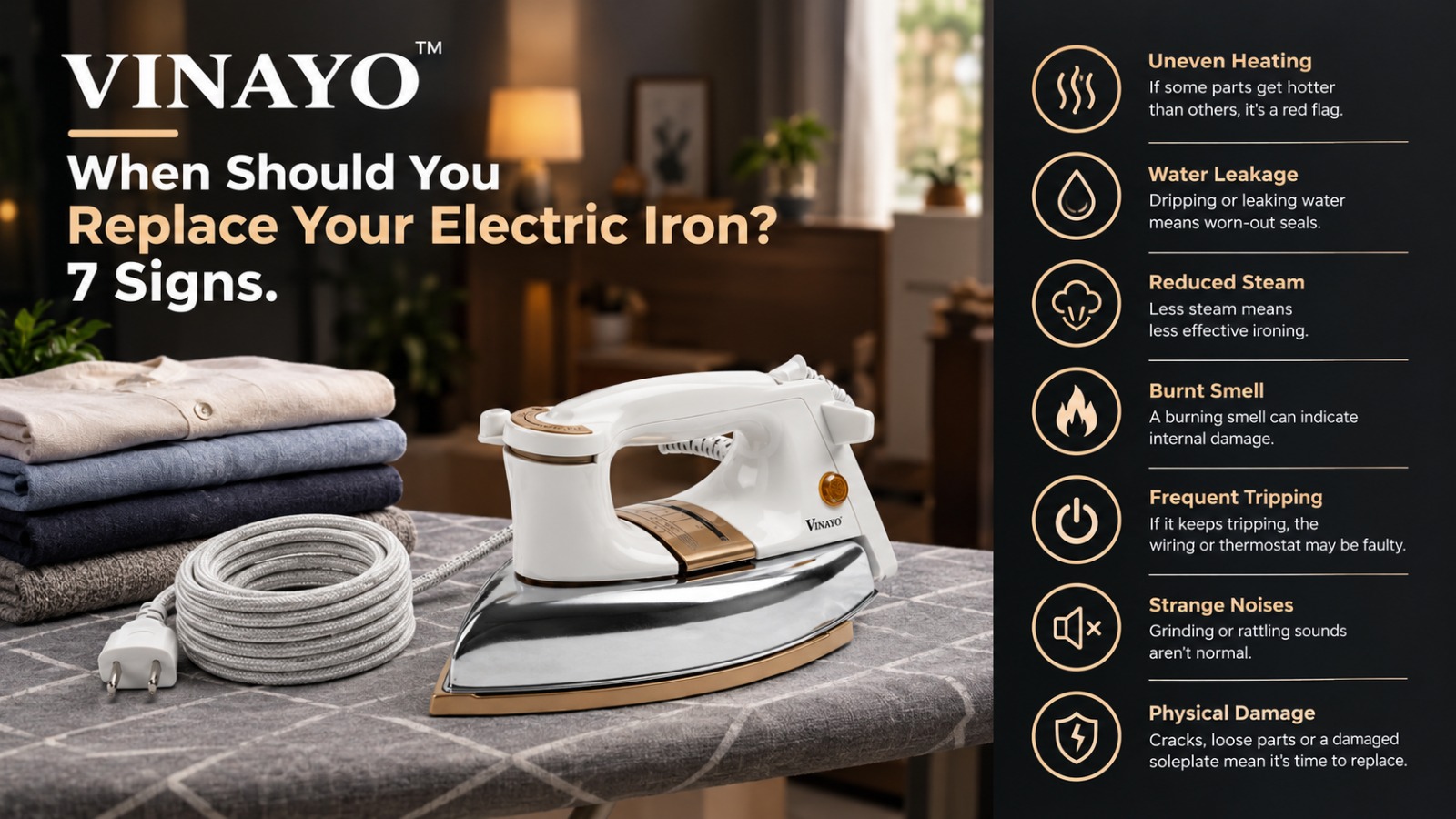
When should you replace your electric iron?
There is no set replacement period for every electric iron as it depends on its condition, usage, maintenance and performance.
Here are 7 signs that you may need to replace your electric iron.
1. The Electric Iron Is Not Heating Properly
A tell-tale sign that an electric iron may need to be replaced is the inability to create the appropriate temperature.
Some common examples of this issue are as follows:
- The iron takes an unusually long period of time to heat up.
- Clothes continue to remain wrinkled after being ironed.
- The soleplate heats up unevenly.
- The iron overheats and then stops unexpectedly.
- The changes to the temperature have no effect.
Before making the decision to replace the appliance, make sure that the problem is not related to the electricity supply or an incorrect temperature setting. However, if this is still the case and the appliance is old, then the best course of action may be to purchase a new electric iron.
2. The Soleplate Is Damaged or Heavily Scratched
The soleplate of the electric iron is the part of the appliance that comes in direct contact with your clothes. Over time, the soleplate of the appliance may start to become heavily scratched or mark the fabric of the garments that you iron.
A damaged soleplate may begin to affect the overall performance of your electric iron. Minor residue can be cleaned in some cases. However, if the soleplate itself is permanently damaged, then it may be best to replace the appliance entirely.
3. Your Electric Iron Is Leaving Marks on Your Clothes
If your electric iron is frequently leaving brown, black, yellow or shiny marks on your clothes despite cleaning the appliance and using the appropriate temperature settings, it may be time to take a closer look at the appliance and its performance. Marks on clothes can range in severity and cause. In some cases, they are the result of residue that may be removed. However, they can sometimes be a symptom of other issues, such as incorrect temperature settings, fabric finishing products, the soleplate being burnt or a permanently damaged soleplate.
The best course of action is to clean the soleplate of the appliance according to the instructions of the manufacturer and ensure that the temperature settings are correct. If there are still issues and the soleplate is damaged, it may be time to consider purchasing a new electric iron.
4. The Temperature Control Is Inconsistent or Inaccurate
Temperature control is an essential feature for any electric iron as different types of fabric require varying levels of heat in order to remove wrinkles.
If the temperature control feature of your appliance is inaccurate or inconsistent, it may be time to purchase a new electric iron.
Some common examples of this issue are as follows:
- The iron is unnecessarily hot at a lower temperature setting.
- The iron is not sufficiently hot at a higher temperature setting.
- The temperature changes inconsistently.
- The thermostat or temperature control of the appliance is faulty.
A faulty temperature control should never be overlooked, especially when ironing synthetic fabric. If the temperature control is inaccurate and the appliance is old, it may be best to replace it.
5. The Power Cord or Plug Is Damaged
Wiring on the power cords and electricity plugs on electric irons is something that should be monitored closely. If the appliance is experiencing issues with electricity, the power cord or plug may be faulty.
Some common signs that the power cord or plug may be damaged are as follows:
- The cords are frayed or expose wires.
- The insulation on the power cord is cracked.
- The plug is visibly damaged.
- Loose connections or cracks appear on the power cord.
- The power cord or plug is excessively heated.
If you have noticed visible cracks or damage to the power cord or plug, stop using the appliance instead of testing it. Avoid repairing the power cord or plug with tapes, patches or other methods. Instead, seek assistance from an authorized service centre or choose to replace the appliance.
6. The Electric Iron Is Becoming Unusually Hot
An electric iron is supposed to heat up to a certain temperature according to its setting. If the appliance is becoming excessively hot beyond this point or has otherwise become problematic, it may need to be replaced. Unusual electricity or heat problems can have a range of potential causes on an electric iron, including temperature, electricity and soleplate issues.
If the iron is not responding to the usual solutions for these issues or they persist, it may no longer be worth your time and effort to troubleshoot the appliance. If an electrical appliance begins to behave unusually, safety should always be prioritized over convenience.
7. The Iron No Longer Meets Your Everyday Needs
Sometimes an electric iron just does not meet your everyday needs. This may mean that the appliance needs to be replaced even if it has no serious issues. For instance, you may need to iron at a higher temperature or your ironing needs have changed.
If you are spending more time working around the limitations of your old iron than ironing itself, it may be time to replace it.
Can Cleaning Fix an Old Electric Iron?
Sometimes, yes. It is important to determine whether the issue is due to dirt or a permanent problem that requires the appliance to be repaired or replaced. A dirty soleplate can impact the ability of the appliance to glide smoothly over clothes and may lead to the clothes being marked. To clean the soleplate on your electric iron, refer to the cleaning instructions that were provided with the appliance.
However, cleaning will not resolve permanent issues such as a faulty or permanently damaged soleplate, issues with temperature or electrical problems with the appliance. If the core element of the appliance is damaged, it may be time to consider purchasing a new electric iron.
Should You Replace an Iron Just Because It Is Old?
Not necessarily. The lifespan of an electric iron depends on a range of factors. As such, a well-maintained electric iron can last much longer than a poorly maintained one. Instead of focusing on the age of the appliance, examine its performance, maintenance, overall appearance and safety.
As long as the electric iron heats correctly, glides smoothly and consistently, maintains the chosen temperature, has no electrical or physical problems and remains functional, there is no reason that it cannot continue to be used.
How to Choose a Replacement Electric Iron
If it appears that you may need a replacement electric iron, it is important to think about your everyday ironing needs.
Some of the most important factors to consider when choosing a replacement electric iron for everyday use are as follows:
- Appropriate power (watts) for everyday use (higher wattage usually heats faster but should be balanced with temperature control),
- a good-quality soleplate that can be used for everyday ironing
- temperature control options (if you tend to iron a variety of fabrics)
- a comfortable design that makes it easier to iron for longer periods of time
- additional safety features such as auto-shutoff (if desired)
- and ease of maintenance.
A Quick Replacement Checklist
When deciding if your electric iron should be replaced, it is important to examine its performance, maintenance, overall appearance and safety.
Ask yourself the following questions:
- Does it heat up correctly?
- Does it maintain the chosen temperature correctly?
- Is the soleplate smooth and free from damage?
- Does it glide smoothly over clothes?
- Does it leave any marks on clothes, even after cleaning?
- Is the power cord and plug in good condition?
- Does the appliance display any abnormal electricity-related problems?
- Does the appliance still meet your everyday ironing needs?
If you are experiencing many of these problems, it may be time for a new electric iron.
Final Thoughts
An electric iron is not an appliance that needs to be replaced simply because it is old. However, it may require attention or replacement for a variety of reasons, including its inability to heat clothes, having a damaged soleplate, temperature control issues, electrical damage, overheating and leaving marks on clothes. Cleaning and storing an electric iron can greatly increase its lifespan. However, there will come a point when the appliance is no longer reliable or safe.
Instead of focusing purely on owning a ‘new’ electric iron, it is important to obtain an appliance that is safe to use and can perform reliably and comfortably.
Frequently Asked Questions
Find answers to common questions about your electric iron.