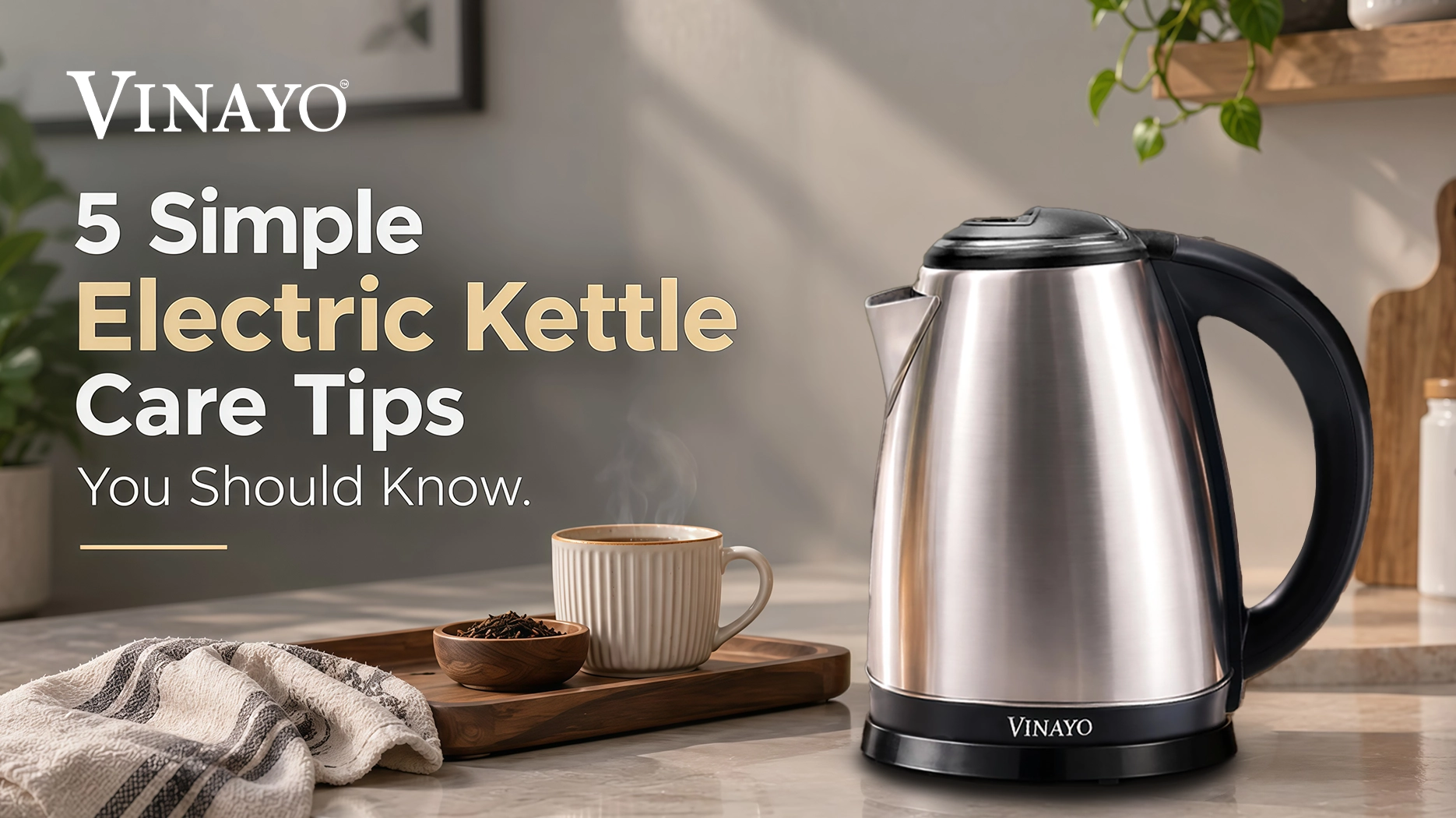
An electric kettle can be one of the most convenient kitchen appliances. Whether preparing tea, coffee, instant noodles, or simply boiling water, an electric kettle can save loads of time. However, frequent usage can result in unwanted deposits, stains and decreased performance if the kettle isn’t cared for. The good news is that caring for an electric kettle is easy.
Here are five simple habits that can help to keep your VINAYO electric kettle clean, efficient and ready for everyday use.
1. Clean the Kettle Regularly
Water can leave mineral deposits inside the kettle, especially if you live in an area with hard water. After the kettle has cooled down, empty any unwanted water and rinse the interior with clean water. You can also wipe the exterior with a soft, damp cloth. Avoid using steel wool, rough scrubbers or abrasive cleaners as these can scratch the surface.
Tip: It is much easier to clean the kettle regularly rather than waiting for a thick layer of deposits to build up.
2. Descale It When You Notice Mineral Buildup
If you see white or chalky deposits inside your kettle, it is time to descale it. Mineral deposits can build up around the heating element and reduce its efficiency over time. Use a suitable descaling solution or the cleaning method recommended in your kettle’s user manual.
After descaling, make sure to rinse the kettle well with clean water before using it again.
3. Don’t Overfill the Kettle
Make sure to always check the minimum and maximum water-level markings before switching on the kettle. Overfilling can lead to the boiling water spilling or splashing out. At the same time, boiling only the required amount of water can save time. For everyday use, it is a good idea to measure the water according to your requirements rather than filling up the kettle.
4. Keep the Electrical Base Dry
The kettle and its electrical base have to be used with care. Never immerse the power base, plug or electrical connection in water. When cleaning the kettle, ensure to wipe the base dry and keep everything completely dry before reconnecting it to the power supply. Also, avoid placing the kettle where water can easily reach the electrical socket.
5. Empty and Dry the Kettle After Use
Avoid leaving water inside the kettle. After using the kettle, empty any unwanted water and let it dry. If you are not going to be using the kettle for a long time, make sure it is dry before storing it. Keeping the kettle dry can help prevent residues and unwanted odours.
A Few Extra Safety Habits
In addition to regular cleaning, keep these simple habits in mind:
- Never operate the kettle without sufficient water.
- Make sure the kettle is kept on a stable and level ground.
- Don’t touch the body of the kettle right after boiling.
- Keep the power cord away from hot surfaces.
- Don’t use the kettle if the cord or plug is damaged.
- Always follow the manufacturer’s operating instructions.
When Should You Get Your Electric Kettle Checked?
If your kettle stops heating, turns off repeatedly for no reason, has a leak, emits a burning smell, has sparks or a damaged power cord, stop using it and have it checked by an authorised service professional.
Attempting to repair an electrical appliance yourself can lead to unnecessary safety hazards.
Final Thoughts
Caring for an electric kettle requires little effort. With r egular cleaning, descaling, using the right water levels and taking good care of the kettle, you can improve its performance for a longer period of time.
With these simple habits, your VINAYO electric kettle can continue to be a handy and reliable part of your everyday kitchen routine.
Frequently Asked Questions
1. What is the best way to clean an electric kettle?
Allow the kettle to cool down completely, empty it and rinse the interior with clean water. For mineral deposits, use a suitable descaling solu tion or the cleaning method recommended by the manufacturer. Clean the exterior with a soft cloth and avoid using abrasive materials.
2. How often should I descale my electric kettle?
It depends on how often you use the kettle and how hard the water is. If you see white deposits, slower heating or accumulation of deposits in the heating area, it is an indication that the kettle needs descaling.
3. Can I leave water in my electric kettle overnight?
It is better to empty the kettle after using it, especially if you aren’t going to be using it again soon. Leaving the water in for longer can contribute to the deposits forming and may affect the water’s freshness.
4. Why does my electric kettle have white deposits inside?
White deposits can typically be seen in kettles used in hard-water areas and are caused by the minerals present in it. Regular descaling can help remove these deposits and keep the kettle clean.
5. What should I do if my electric kettle stops working suddenly?
Switch it off and unplug it from the power supply. Let it cool and see if the cause could be insufficient water or its safety cut-off. If it still doesn’t work, avoid trying to perform a DIY electrical repair and have it checked by an authorised service professional.