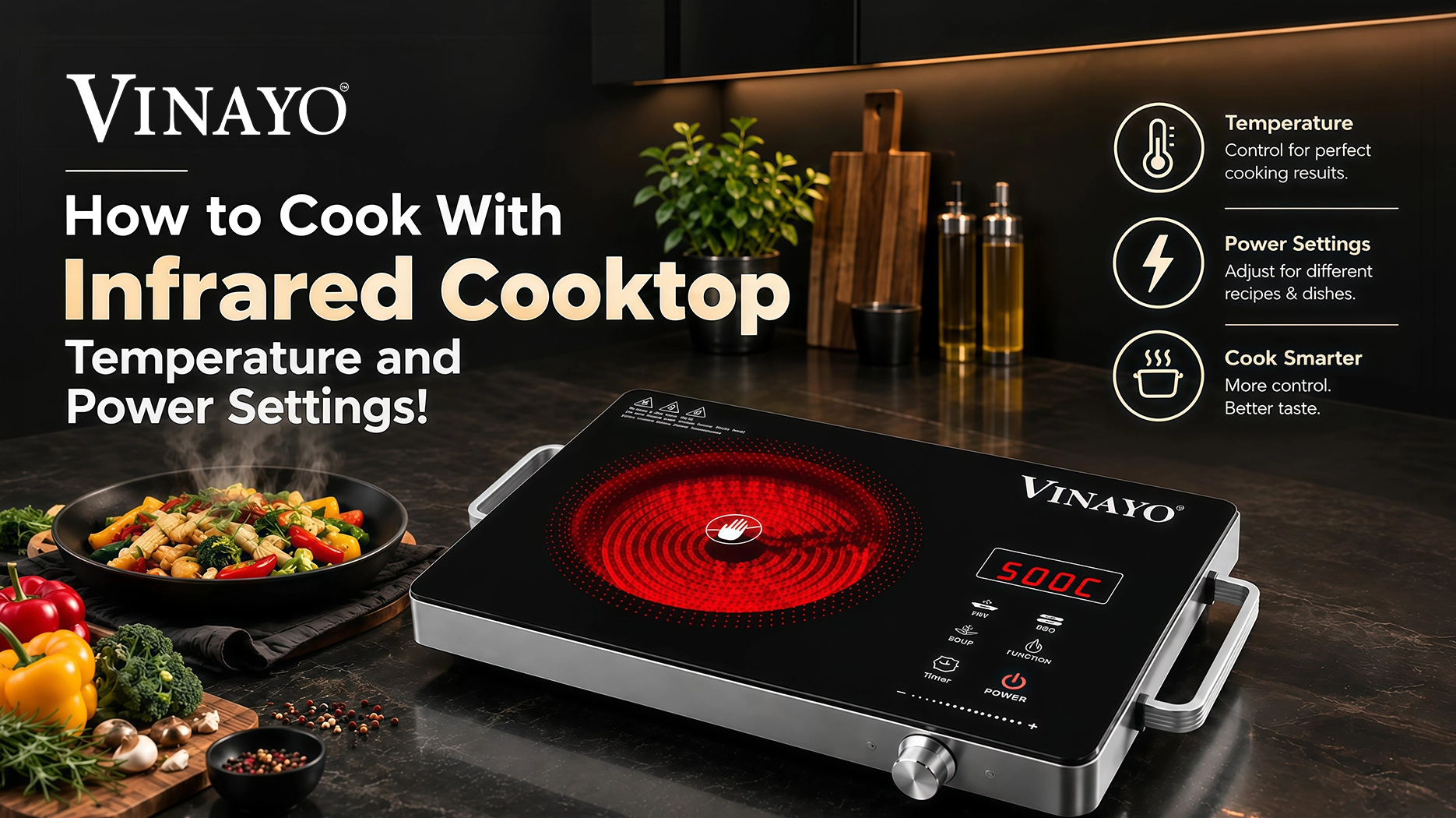
An infrared cooktop makes cooking easier. But to get the best results you need to know how to use the infrared cooktop temperature and power settings to make everyday cooking easier. Whether you’re boiling an egg, making a pot of tea, frying some chips, cooking your favorite vegetable, or making a Curry, you need the right amount of heat to make it taste good. This simple guide will show you how to use an infrared cooktop temperature and power settings to make everyday cooking easier!
What Is The Difference Between Power & Temperature Settings?
- Although similar, the power setting and temperature setting aren’t the same.
- Power settings generally dictate how much power is being used to make heat. So the higher the power, the hotter the hob, the lower the power the hotter it gets.
- Temperature settings on the other hand are generally designed to let you choose the amount of heat you want. The accuracy of the setting can vary, depending on what you’re cooking and the cookware you’re using.
- Infrared cooktops can vary depending on the brand and model.
High Power Settings Are Great For Quick Boiling
Higher power settings are perfect for getting things hot fast!
You can use a high power setting to:
- boil water
- make tea
- heat things up
- get things started
- frying (depending on the recipe)
- boil your curry
Once you’ve got the food cooking, you can turn the power down to give you more control over it.
Medium Power Settings Are Great For Everyday Cooking
Medium power settings are great for all your everyday cooking needs.
You can use medium power settings to:
- cook your veggies
- make a curry
- make dal
- cook rice
- sauté
- make breakfast
Medium power settings give you enough heat for everyday cooking without having to use full power all the time.
Low Power Settings Are Great For Simmering
Low power settings are great if you’re simmering your food. But they’re also good for keeping things warm or melting something in a pan over low heat.
You can use low power settings to:
- simmer your curry
- keep things warm
- reheat certain foods (depending on the recipe)
- melt things in a pan
Lower power settings are best if you’re not using high heat for your recipe and you want to avoid food sticking to the bottom of your pan.
How Do I Know Which Setting To Use For My Food
The setting you choose is dependent on what you’re cooking.
For most things, you’ll probably want to start with a high power setting to get the pan hot. Then once you’ve added your ingredients, you can turn the power down to give you more control over the cooking process.
- High Power = Get Things Hot
- Medium Power = Cooking Power
- Low Power = Simmering Power
After a while, you’ll get to know what heat settings to use for your favorite recipes.
The Influence Of Cooking Vessels On Heat
Cooking vessels play an important part in infrared cooking. For best results, always use recommended flat bottom vessels to make sure you’re getting the most out of your hob. Depending on what you’re cooking and the material of the vessel you’re using, it can influence the outcome of your food. That’s why the same power setting might not give you the same results if you’re using a different pan or vessel.
Why You Shouldn’t Always Use Maximum Power
Maximum power isn’t always best for cooking your food. High power settings are great if you want to boil something fast. But for most other things, you don’t want to use the highest power setting.
Using the wrong power setting can lead to food sticking to the bottom of your pan and your food not tasting as good as it should. So make sure you’re using the right power and temperature setting for the food you’re cooking.
Using The Preset Cooking Settings
Depending on the brand and model of your infrared hob, you might have various preset cooking settings to help you cook certain types of food.
Different preset settings can be used for boiling, frying or simply heating up your food.
Although these preset options are convenient, you should still keep an eye on your food while you’re cooking it.
Some Quick Tips For Controlling The Heat
Now that you know how to use your hob, here are a few quick tips to help you make the most of your infrared cooktop temperature and power settings:
- Select the right power to suit the type of food you’re cooking.
- Turn the heat down once the food has reached the desired temperature.
- Always use recommended flat bottom vessels or pans.
- Don’t always use maximum power to cook your food.
- Pay special attention to milk, oil and water.
- Change the setting depending on the amount of food you’re cooking.
- Always follow the operating instructions provided by the manufacturer.
Cooking With More Control Than Ever Before
Understanding infrared cooktop temperature and power settings can help you make the most of your everyday cooking. You can use high power to boil water, medium power for cooking and low power for simmering. The right power depends on the type of food you’re cooking, how much food you’re cooking and the size of your pan or vessel.
You don’t need to use full power all the time. And with a little bit of practice, you’ll be using the right power and temperature settings for your food and recipes.
Frequently Asked Questions
Find answers to common questions about cooktop power and temperature settings.